Download Installer Windows 8
Updated 4/9/15: This article is out of date; for the latest information with active links, here’s how to download and install the latest version of Windows 8.1 Update for free.Or go here to find.
About iTunes iTunes is the easiest way to enjoy your favorite music, movies, TV shows, and more on your PC. ITunes includes the iTunes Store, where you can purchase everything you need to be entertained. Your purchases are stored in iCloud and are available on your devices at no additional cost. What’s new in iTunes This update allows you to sync your iPhone., iPad., or iPod touch with iOS 9.x and earlier on Windows XP and Windows Vista PCs.iPhone SE and iPad Pro (9.7-inch) is not supported on Windows XP or Windows Vista.
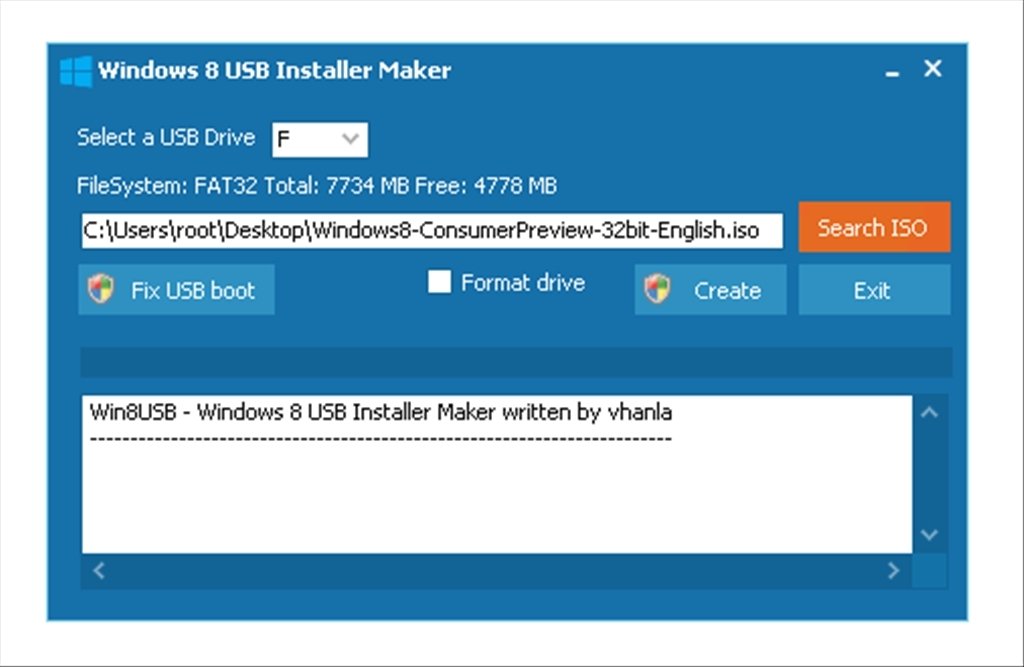
Download Activex Installer Windows 8
ITunes requirements: Hardware:. PC with a 1GHz Intel or AMD processor with support for SSE2 and 512MB of RAM. To play Standard Definition video from the iTunes Store, an Intel Pentium D or faster processor, 512MB of RAM, and a DirectX 9.0-compatible video card is required. To play 720p HD video or an iTunes LP, a 2.0GHz Intel Core 2 Duo or faster processor, 1GB of RAM, and an Intel GMA X3000, ATI Radeon X1300, or NVIDIA GeForce 6150 or better is required.
To play 1080p HD video, a 2.4GHz Intel Core 2 Duo or faster processor, 2GB of RAM, and an Intel GMA X4500HD; ATI Radeon HD 2400; Nvidia GeForce 8300 GS or better is required.
I don't recommend using your company's production workstation because IT administrators frown upon that sort of thing. In addition, your organization probably has some sort of encryption such as McAfee Endpoint Protection or, and while there might be ways to get around this, it's probably not worth the effort because it's better to install Windows 8 on a non-production machine. Follow the link to 'Windows 8 Consumer Preview Online Install,' download a 5 MB.exe file, and make sure there is a connection to the Internet. Once you run the.exe file, it pulls the files from Microsoft's site, and Windows 8 should run pretty smoothly. Figure 1B For this discussion, however, we need the International Organization for Standardization (ISO) image.
You can from Microsoft. Burn it to a DVD or open and mount it with a third-party utility such as. There are a couple of interesting features in the Windows 8 setup.
Figure 1A shows the Setup screen that summarizes the apps and devices. Figure 1B shows the compatibility report that lists the devices and apps on my machine as well as which ones will and won't work. I can then take steps to correct the problem. Just like Windows 7, the can be installed in a, and the machine can be booted from the VHD. Windows 2008 R2 and Windows 8 Server can also be installed to a VHD. This means you can boot multiple configurations and operating systems from one physical server. This is better than relying on virtual machines (VMs) because you are truly running on physical hardware rather than having the hypervisor and all the virtual devices separate your Windows installation from the hardware.
If you are testing products or software for, it is better to test on the actual hardware rather than in a VM. It's easy to configure a computer that can boot to various flavors of Windows 7, Windows 8 or their server equivalents, in addition to having various running different apps or versions of apps. Another benefit of using these configurations is that just like with a virtual machine, if you mess it up, you can always boot to another configuration (VHD), delete the problematic one, and rebuild it. There are a couple of ways to do this - an easy way and a slightly more complicated way, depending on what you want. The Easy Way You can get Windows 8 on your Windows 7 laptop in just a few minutes longer than the installation takes. From a Windows 7 client, boot the Windows 8 DVD. When setup asks, 'Where do you want to install Windows?'
Hit SHIFT-F10 to get to WinPE. At the WinPE command prompt, use Diskpart to create the VHD: DISKPART create vdisk file=d: VMs Win8.vhd type=expandable maximum=60000 DISKPART select vdisk file=d: VMs Win8.vhd DISKPART attach vdisk DISKPART create partition primary Alternatively, you could create the VHD prior to booting the Windows 8 DVD and use Diskpart to attach it with the following commands (point to the.vhd file you created): DiskpartSelect vdisk file=d: vms win8.vhd Diskpartattach vdisk 4. Return to Setup. When it gets to the screen asking for the disk location, the VHD will show up. Setup will continue and install Windows 8.
Notes:. Windows 8 Boot Manager will be installed, replacing Windows 7 boot manager.
Don't do this if you are on your company laptop and are afraid of the IT police. But I did it on my non-production laptop, and it is fine. BCDEdit is modified so you see Windows 8 in the boot menu just like in the old. The (Windows Imaging file format) is applied to the VHD, avoiding lots of work found in the more complicated way below. A more complicated but more powerful method The procedure described above is great for a quick install, but what if you want to build or sandbox environments with apps? The following procedure will allow you to boot custom WIM files, Sysprepped images, etc.
And is relatively simple and well documented. I've learned, however, to open some options and avoid pitfalls. Here are three steps to create the bootable VHD.

Preparation:. Obtain a WIM image of Windows 8 (or whatever Windows version you want to install). Obtain a copy of Imagex.exe, a Microsoft utility in the Windows Automated Installation Kit (WAIK). Use a computer with sufficient disk space. The client versions of Windows 7 and Windows 8 require about 15 GB of disk space for a minimal installation. Installation:.
Create a VHD. Put the WIM and imagex.exe on the C: drive.
Use imagex commands to copy the WIM image to the VHD. Use BCDEdit to build a boot file to boot the VHD. If you are holding me to the 45-minute timeline, note that the three most time-intensive operations will be copying the WIM file, creating the VHD and running imagex to copy the Windows image to VHD. Your mileage may vary.

Preparing a machine for the Windows 8 Consumer Preview First, create a directory to hold the files required for this process. I used C: VHD. Open up a couple of administrator-level command windows. Obtain a WIM File. The easy way to get a WIM file is from the Windows ISO image or DVD. Starting with Windows 7, Microsoft began using WIM files rather than having all the files in the i386 directory. WIM is a single file that is stored in the Sources directory on the DVD or ISO image.
Note that they are always called 'install.wim,' so if you have multiples, give them a descriptive name. WIM files can be built and customized with specific drivers, language packs and applications. There are a number of tools to do this, but my favorite is the, which can be used to build custom WIM files. For our purposes, we'll use the default install.wim from the Windows DVD or ISO image. Action: Copy the WIM file to C: VHD (or whichever directory you are using). Obtain a copy of imagex.exe.
This is the toughest part of this process., which is available in 32-bit and 64-bit formats. Action: Copy imagex.exe to C: VHD. Build the VHD This can be done using the Disk Management snap-in to the Microsoft Management Console (MMC) or the.
Using Disk Management MMC. Figure 2. Create the VHD. In the Disk Management MMC, select Apply, then select Create VHD. In the Create and Attach VHD wizard (see Figure 2):. Browse to 'dir C: VHD' and enter a file name such as 'Win8Preview.vhd.' Remember to make the file name descriptive because you may want to have several different images.
Although Windows 7 needs only about 7 GB, you should give it at least 15 GB. Select fixed-disk size.
While a dynamic disk may save disk space, the dynamic disk must have the full expanded size in free disk space when it boots or it will fail to. Always use a fixed disk for a VHD boot. Select OK to build the VHD. It takes a while; look to the lower-right corner of the computer management snap-in to see its progress. The VHD will now show up as a disk in Disk Management. Right-click and initialize the disk.
The VHD disk should now show online. Right-click on the VHD disk, select Simple Volume - New Simple Volume Wizard, and fill in the specifications as needed.
Note that in the disk properties, you can select Attach VHD (mount) if it is unattached or Detach VHD (unmount) if it is attached. Figure 3 Using DiskPart (for scripting) (See Figure 3.) C: Diskpart DISKPART List Disk (lists all disks) DISKPART Select Disk 0 (select disk where current OS is loaded) DISKPART List Vol (the OS is typically loaded on C:) DISKPART Create vdisk file='c: vhd Windows8.vhd' maximum=200000 (Note that the default type is Fixed. Use the Type option for Dynamic (expandable). The maximum is the disk size in megabytes. Make sure the file name is in quotation marks.) DISKPART Select vdisk file='c: vhd Windows8.vhd' (Select the disk to which the following commands will apply.) DISKPART Attach vdisk DISKPART create partition primary DISKPART assign letter=E DISKPART format quick FS=NTFS label=Win8Preview DISKPART exit Use imagex to apply the WIM file (Windows image) to the VHD. Figure 4.
Use the command: imagex /info c:/vhd/install.wim to dump the information (see Figure 4). The Index value shows the version of Windows. The Index value of 1 in Windows 7 WIM indicates the Enterprise edition. Currently, there is only one version of Window 8. Apply the WIM file to the VHD (in this case, the VHD is the E: drive): imagex /apply c: vhd install.wim 1 E: The 1 between the WIM file path and the destination drive letter indicates that we want to install the Enterprise version.
Note that this will take a while. Modify the boot menu with BCDEdit.